Why a stable address matters
Every time you register somewhere, open an account, sign a contract, or fill in a form, you are asked for an address. A stable address means you always use the same one. No scattered records, no outdated information, no wondering which address you gave to which institution. That consistency is the value. And if something does arrive by post, you know it lands somewhere safe.
Think of it like a phone number. Your phone number is not valuable because you get called a lot. It is valuable because it is there when someone needs to reach you. A TDPB address works the same way.
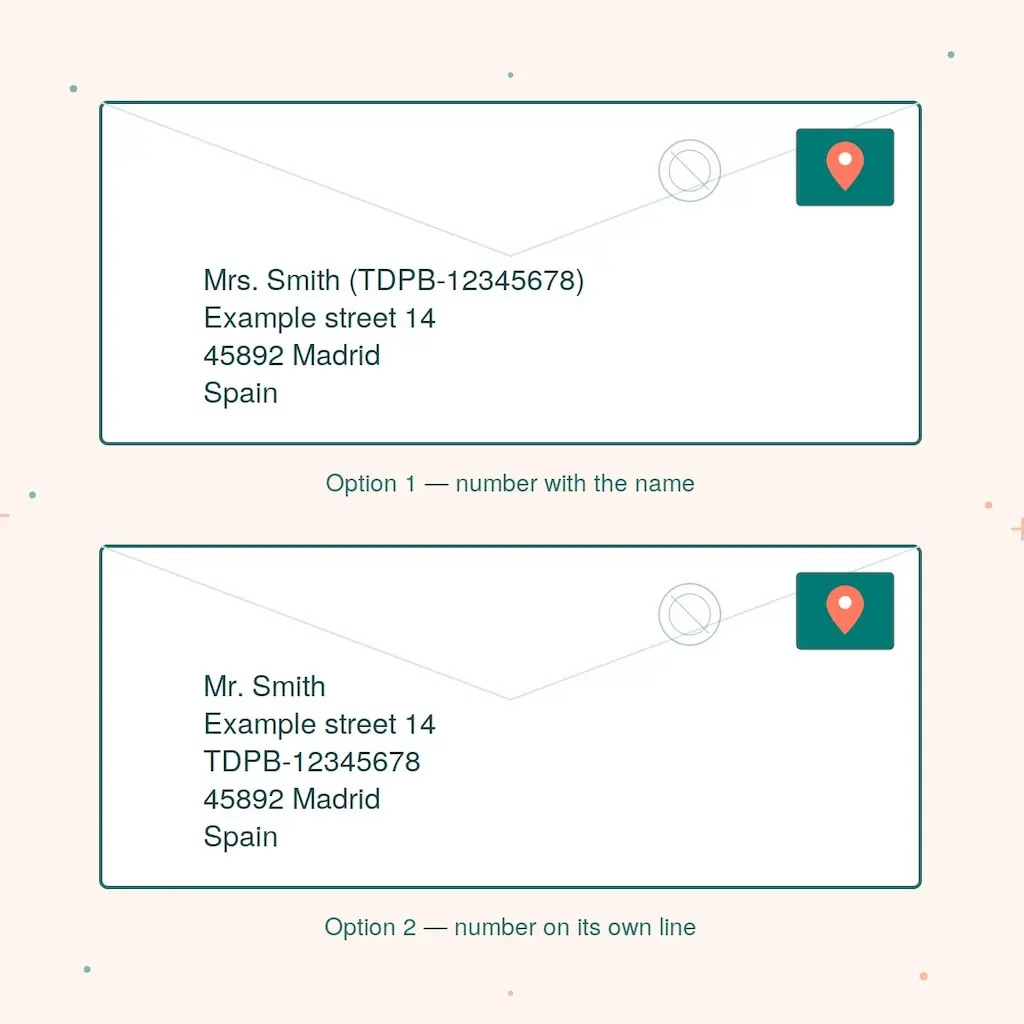

Where you can use your address
In practice, you can use a TDPB address almost anywhere you would normally give out a contact address:
It works whether you have it as your only address, or as one of several. Whether you live abroad, split your time between two homes, or simply want to keep your home address private, this is the one address you give out, knowing it stays stable and reachable.
Using your address in different countries
Every country has its own rules and regulations. These articles give you as much information as possible, so you can make an informed decision.

Why our addresses work
Most virtual address services rely on large mail centres or virtual office hubs, where hundreds or even thousands of people share the same address. That model creates problems. Banks and authorities notice the patterns, and mail to those addresses starts to be treated with extra suspicion.
We do it differently.
The Digital PO Box works with a network of independent local Partners. Copy shops, real estate offices, small co-working spaces, established businesses with a real function and a visible local presence. Mail handling is one part of what they do, not the whole reason the location exists.
That has real consequences for you:
It's not a guarantee against every kind of acceptance question, but it does mean our addresses are deliberately set up to avoid the patterns that banks and authorities most often flag.
Ready to try it? Get a real address in minutes.
Keeping addresses separate is smart
Most people today can't avoid having more than one address. A residential address where you actually live (and that you want to keep private). A fiscal address with your accountant or fiscal representative. A registered office address for your business. A stable correspondence address for everything else.
Many still try to squeeze all of that onto a single address. Sometimes to save costs, sometimes just out of a feeling that it should all be in one place. In practice, it makes you less flexible.
When your correspondence address is independent, you can switch accountants, restructure your company, move countries or change your tax setup without disrupting your bank, your insurer, your subscriptions or your family. The address stays. Everything else can change around it.
That's also why a TDPB address is deliberately scoped as a correspondence address. Not a fiscal address. Not a registered office. The narrower scope is what makes it usable almost everywhere.

What our addresses are not designed for
To keep expectations clear: a TDPB address is a correspondence address, not a substitute for every kind of address you might need. It is not a residential address, not a fiscal address, not a registered office or legal seat for a company, and not a walk-in business location.
For those, you need different solutions. Often very good ones, like a local fiscal representative for your tax address, or a business registration provider for your registered office. A TDPB address works well alongside any of these.
About acceptance
Whether any specific institution accepts any specific address is always their call. Rules differ by country and situation, and they can change. We don't make blanket promises about acceptance, because we don't control those decisions.
What we do control is how our model is built: real Partner locations, used by a limited number of customers, ISO 27001 and ISO 27701 certified processes, and full transparency about what the address is and isn't. The FAQ below covers the most common real-world questions.