





Table of contents
Latest articles

How to Choose a Virtual Address in Europe (2026)
Posted on October 27, 2026

Do Freelancers Actually Need a Business Address?
Posted on October 12, 2026

Best Digital Address Services in Europe (2026)
Posted on August 18, 2026

What is a virtual address and how does it work
Posted on August 18, 2026
Is a Digital Address Secure? Our ISO Certification, Explained
Posted on August 17, 2026

EU Digital Services Act
Posted on July 13, 2026

PO Box Alternatives in Dubai for Expats (2026)
Posted on March 3, 2026

Best Ways to Receive Mail in Spain as a Non-Resident
Posted on February 27, 2026

Best Virtual Mailbox for Digital Nomads (2026)
Posted on February 25, 2026

The best PO Box alternative
Posted on January 22, 2026
What is a virtual address and how does it work?
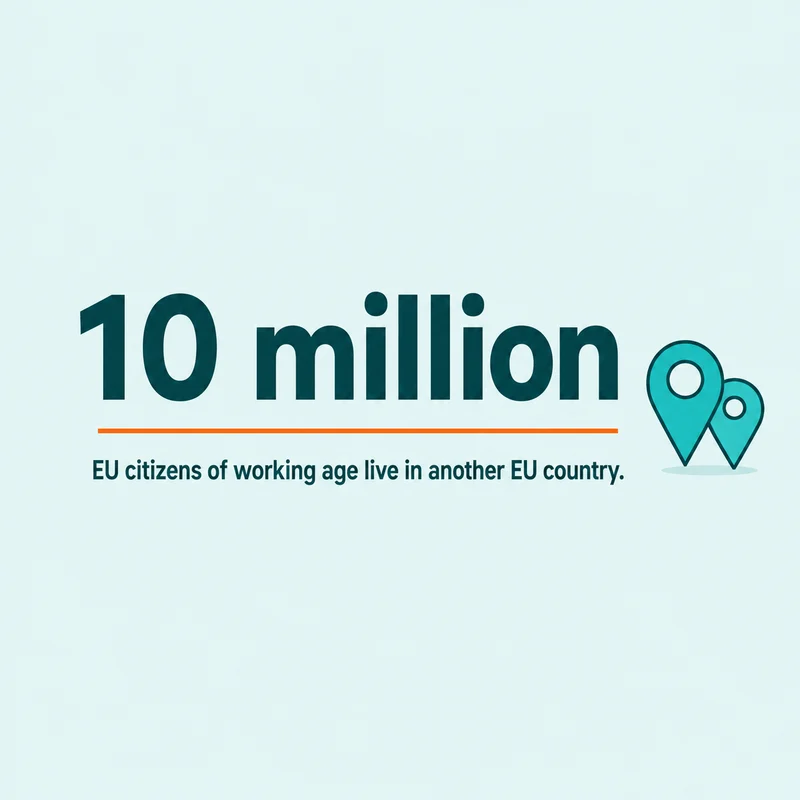
A virtual address is a real address at a provider's location that you use as your own for official correspondence. You sign up, verify your identity, and give the address to your bank, your insurer, and anyone else who needs to reach you. When something arrives, the provider notifies you, and most providers can scan letters to an online inbox if you want that. The word "virtual" describes how you manage the address, from your phone or laptop. The address itself, with a good provider, is a real, physical street address.
The four types of virtual address in Europe
The biggest source of confusion is that "virtual address" is used as a label for four different products, and they solve different problems. Before you look at a single price, work out which of these four you are actually shopping for.
| Type | What you get | Best for | Main limits |
|---|---|---|---|
| Correspondence address (often sold as a "virtual mailbox") | A real street address you use for personal or business correspondence, with notification and optional scanning of what arrives | Expats, nomads, second-home owners, and anyone who wants a stable address without moving their post | Not a registered office and not proof of residency; usually letters and documents only, not parcels |
| Virtual office / registered office | A legally recognized company address that can serve as a company's official registered office, sometimes bundled with phone and mail handling | People forming or running a registered company who need a legal seat of business | The wrong product, and usually the wrong price, for someone who only needs personal correspondence |
| Mail and parcel forwarding | A receiving address that repackages your post and parcels and ships them on to wherever you are | Cross-border shoppers who need parcels forwarded internationally | Built around shipment volume and forwarding fees, so costs add up; it is a shipping service more than a stable long-term address |
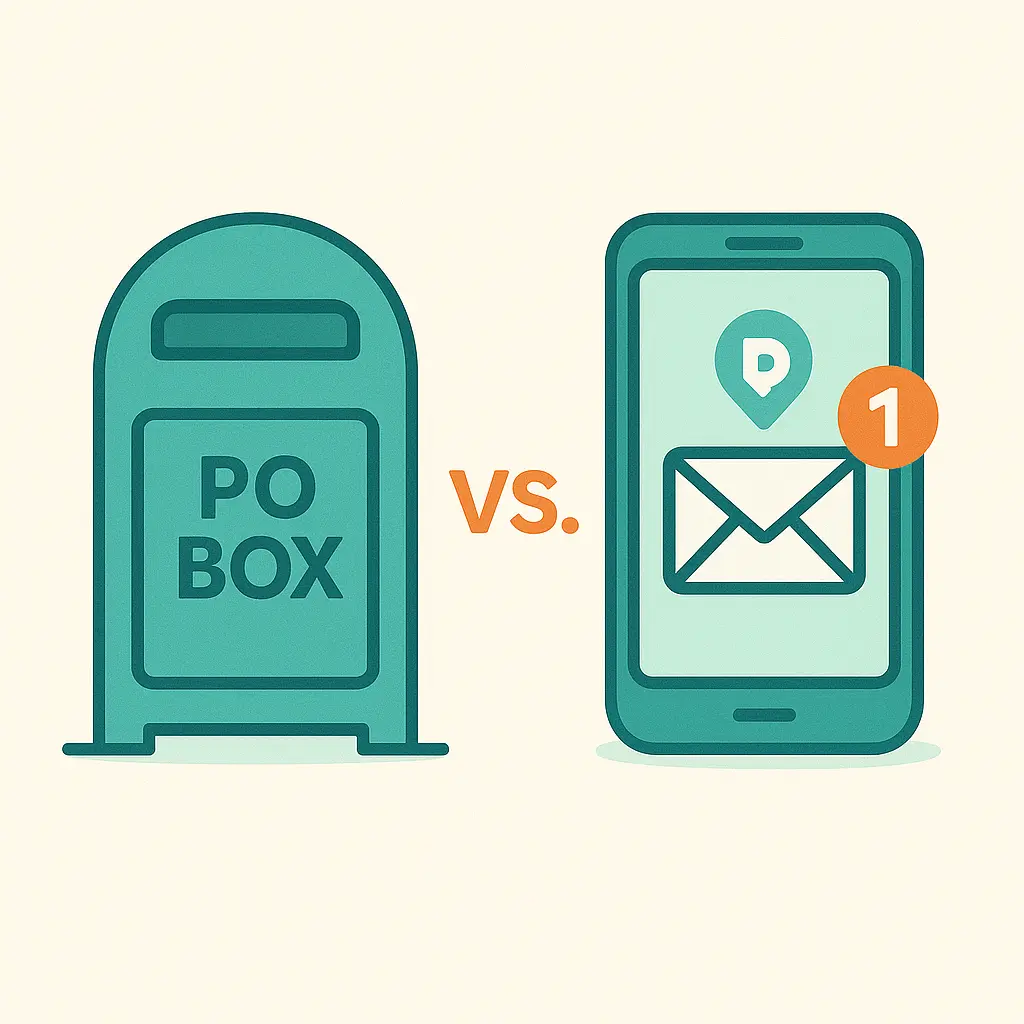
| Traditional PO box | A numbered box at a post office where your post is held until you collect it | People who just want a secure place to pick up letters themselves | No digital access to your post; you have to collect it in person; most forms ask for a street address, which a PO box is not |
Most people who search this question need the first row, a correspondence address, and the rest of this guide walks through choosing one. If what you actually need is to register a company, that is a different product. A registered office is a legal requirement for companies, and virtual-office providers sell it. A correspondence address cannot do that job.
Step 1: Decide what the address needs to do for you
Before you look at any provider's website, work out what you need the address to do. Write down the situations where you will use it. Common ones we see: you are moving between countries and need an address that does not change with you, you spend part of the year at a second home and official post arrives while you are away, you want to keep your home address off public forms and customer records, or you simply want one stable address that banks and official bodies can always reach.
Notice that in every one of those situations, the real need is staying reachable. The letters themselves are the smaller part. What you are buying is an address that stays the same while you move. Keeping that in mind protects you later, when provider pages try to sell you on scanning features and app screenshots instead of the address itself.
Step 2: Pick the country where you need the address
Pick the country where your institutions and obligations are, and ignore which country happens to be cheapest. If your bank, your insurer, and your official post are in Spain, an address in Spain is the one that helps you. An address in a country you have no ties to might cost less, but it does not solve your problem.
One more thing to check at this step: the rules on what an address may be used for differ by country. In the United Kingdom, France, and Cyprus, for example, business use of this address type is limited to freelancers and sole traders, not registered companies such as LTDs or their local equivalents, because of specific legislation in those countries. Rules like this exist elsewhere too, so before you sign up, read the provider's page for the country you are considering. Do not assume every country works the same way.
Step 3: Check what you can use the address for
Legitimate correspondence-address services operate lawfully across Europe. Reputable providers verify the identity of every customer, and receiving your post at an address where you do not live is a normal arrangement, not a loophole. The legal questions people have about these services are almost always about what a specific institution will accept, not about whether the service itself is allowed.
Acceptance is always the institution's decision. No provider can guarantee that every bank or authority will accept its address, and you should treat any provider that promises this as a warning sign. What a careful provider can do is avoid the patterns institutions most often flag, such as large anonymous mail centres shared by thousands of customers. A real local street address, used by a small number of verified customers, behaves like a normal address. That helps, but the final decision still belongs to the bank or authority you are dealing with.
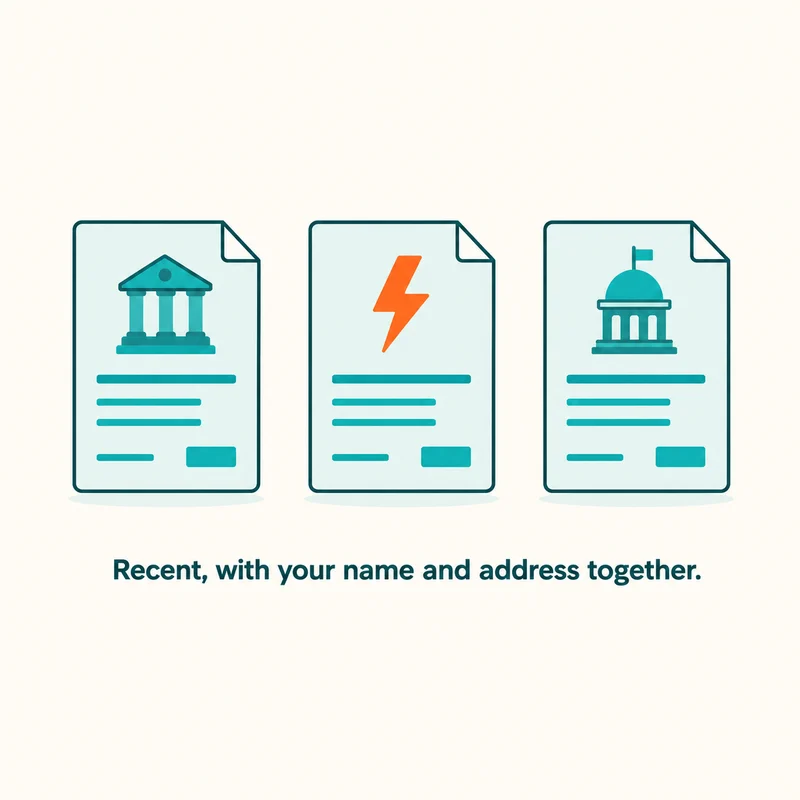
It also helps to know what institutions usually want when they ask for proof of address. The common proof-of-address pattern is a document from an independent or official source, such as a bank statement, a utility bill, or government correspondence, issued recently, often within the last three months, and showing your full name and the address together. Each institution sets its own exact requirements, so check with the specific bank or office before you rely on any address for an important purpose.
A correspondence address is never proof of residency, a registered office, or a tax registration. If a provider suggests otherwise, choose a different provider.
Step 4: Vet the provider
This is the step where providers really differ, so it is worth slowing down. Run every provider on your shortlist through this checklist:

- Real local address or mass mail centre? Ask where the address actually is and roughly how many customers share it. A real street address at a local building, shared by a limited number of people, is a very different thing from a unit in an industrial park with thousands of users.
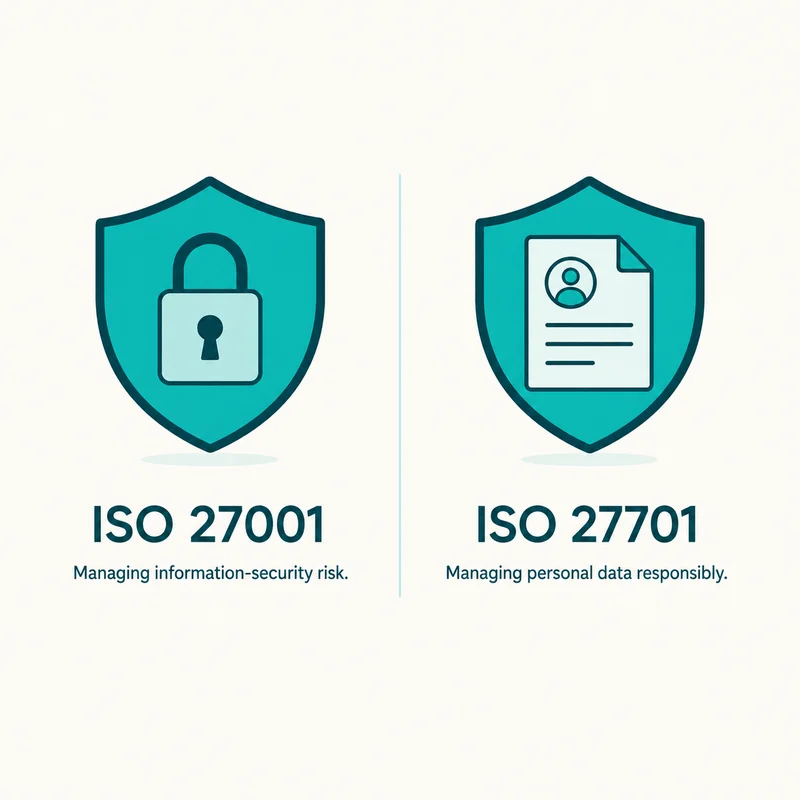
- Privacy and security. Your post is personal data, and GDPR applies to any provider that processes personal data of people in the EU, including scanned letters. Look for a clear, readable privacy policy, and look for independent security and privacy certification, such as ISO 27001 and ISO 27701. Certification like this is still rare among address providers, so it is a strong signal when you find it.
- Identity checks. A provider that verifies who you are before activating your address is protecting the address itself. If anyone can sign up anonymously, institutions have good reason to distrust every address that provider offers, including yours.
- Pricing transparency. You should be able to see the full cost before signing up: the subscription, plus what each scan or forwarded item costs. If the per-item prices only appear after you register, assume they are high.
- Contract terms and cancellation. In the EU, consumers who buy services online are covered by a 14-day right of withdrawal, meaning you can cancel within 14 days of signing up without giving a reason. A confident provider points this out and offers monthly cancellation on top. Be cautious with long minimum contracts. A service you are happy with does not need to force you to stay.
- What happens to your post. At minimum you should be notified when something arrives. Scanning should be optional and priced separately, so you are not paying for handling you never use.
- Coverage. If your life spans two or more countries, check whether the provider offers addresses in each of them under one account, so you are not managing two providers and two logins.
If a provider fails any one of these checks, move on to the next provider. Once you know which type you need and what to check, comparing providers does not take long. If you want a starting point, we keep an up-to-date roundup of the best digital address services in Europe.
What does a virtual address cost in Europe?
For a personal correspondence address from a reputable European provider, expect a subscription from under €10 up to around €35 per month, depending on the plan and the location. Most standard personal plans end up costing somewhere between €18 and €25 a month once you have picked a real location and a plan. The advertised "from" price on a homepage is often lower than what a typical customer ends up paying, which is exactly why pricing transparency belongs on your checklist.
Scanning is the other number to check, because it is usually priced per item. Most providers charge per scanned letter, or per page, once any scans included in your plan run out, and the per-scan price drops when you buy a larger bundle. As a concrete example: an address with The Digital PO Box costs € 15 per month, or € 90 per year, per location, with no setup fees and no long-term contract. Scanning is an optional add-on so you only pay for it if you use it, with scans from €0.90 to €1.25 each depending on bundle size, or €7.50 per month for unlimited scanning. The full breakdown is on our rates page.
An address that stays with you
If a correspondence address is the type you need, we would be glad to be on your shortlist. At The Digital PO Box, we give you a real street address at a vetted local Partner location, with pricing you can see up front, and certified handling of your personal data. You can see exactly how it works and set up your address in a few minutes. Once you have signed up, the remaining job is giving the new address to your bank, your insurer, and everyone else who posts to you. Our guide to receiving mail while living abroad covers that changeover. And if you are still comparing, take this checklist with you. It works whichever provider you choose.
An address that stays with you
A real street address at a vetted local Partner location, with pricing you can see up front and certified handling of your personal data. Set up your address in a few minutes.
A few common questions
A traditional PO box is a numbered box at a postal facility where your post waits until you collect it in person. A correspondence-type virtual address is a real street address, and the provider notifies you when something arrives and can scan it to your online inbox. The practical difference shows up on forms: many institutions ask for a street address, which a PO box cannot give you. We compare the two in more detail in our virtual mailbox vs PO box guide.
A single address exists in one country, so the same address cannot cover you in several countries at once. What you can do is hold addresses in more than one country with the same provider and manage them from one account. If you split your life between two countries, an address in each is usually the practical answer. At The Digital PO Box, each location costs €15 per month or €90 per year, and you can add locations as your situation changes.
Sometimes, but no provider can honestly guarantee it, because each bank decides for itself based on its policies, the country, and your situation. Banks typically want a recent proof-of-address document from an independent source showing your name and address together. A real street address from a provider that verifies its customers is less likely to raise questions than an address from a large anonymous mail centre, but the decision always rests with the bank.
Yes. Legitimate correspondence-address services operate lawfully across Europe, and reputable providers verify the identity of every customer. What matters is using the address for what it is meant for: correspondence. It is not a registered office, proof of residency, or a tax address, and using it honestly for post and official communication is a normal, lawful arrangement.


